
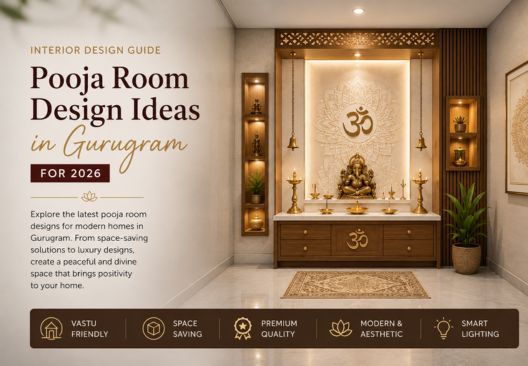
Pooja Room Design Ideas in Gurugram for 2026
In a fast-paced hub like Gurugram, where the skyline is dominated by sleek high-rises, luxury villas, and busy lifestyles, finding a moment of quiet can feel like a luxury. That is exactly why more and more homeowners are looking to create a peaceful anchor right inside their homes. A thoughtfully designed pooja room is no longer just a traditional requirement; it is a personal sanctuary—a calm corner to reconnect, unplug, and find peace amidst the daily hustle.
Yet, setting up a prayer space in a modern home comes with its own set of challenges. How do you fit a mandir into a compact apartment? How do you balance traditional aesthetics with minimalist, contemporary interiors? Where do you hide all the extra brassware, cotton wicks, and heavy prayer books?
The good news is that interior design in 2026 is all about smart flexibility. You don’t have to choose between your spiritual traditions and a modern aesthetic. Here is how you can seamlessly blend the two to create a beautiful, functional sacred space.
Why the Mandir Deserves Early Attention in Your Interior Planning
Too often, homeowners pour their energy into designing stunning living rooms, modular kitchens, and master bedrooms, only to treat the pooja area as an afterthought—tucking a ready-made unit into an empty corner at the very end.
Because the pooja room sets the energetic tone for the whole house, it deserves to be integrated into your home's layout from day one. If you are planning a complete home makeover, designing the prayer space alongside your overall interior theme ensures it feels like a natural, intentional extension of your home, rather than an isolated addition.
Smart, Space-Saving Designs for High-Rise Apartments
If you are living in a typical Gurugram apartment where every square foot counts, dedicating an entire room to a mandir might not be realistic. But limited space shouldn’t mean compromising on elegance.
- Wall-Mounted floating Mandirs: A major trend this year is the use of vertical space. Floating wooden or corian units with clean lines, integrated drawer storage, and warm backlit panels look incredibly sophisticated without taking up an inch of floor space.
- The Living Room Niche: Tailoring a dedicated alcove or niche within your living or dining area allows the mandir to remain accessible and central to family life, while maintaining a clear architectural boundary.
Glass-Enclosed Mandirs: The Best of Both Worlds
For homes featuring a highly contemporary or minimalist design, heavy traditional structures can sometimes clash with the rest of the decor. A glass-enclosed pooja room offers a beautiful middle ground.
Using frosted glass, fluted panels, or delicate etched religious motifs creates a distinct, private zone for prayer without visually chopping up your floor plan. This approach is incredibly popular in luxury penthouses, as it allows natural light to filter through while keeping the overall aesthetic light, airy, and thoroughly modern.
The Timeless Warmth of Wood
No matter how interior trends evolve, wood remains the most loved material for a pooja space. It brings an instant sense of warmth, grounding energy, and timeless beauty to a room.
In 2026, the trend is shifting away from heavy, overly ornate structures toward clean, transitional woodwork. Think rich teak, premium laminates, or engineered wood featuring sleek CNC jali cutouts instead of dense carvings. Paired with polished brass bells and soft, concealed LED strip lighting, a wooden mandir creates a deeply inviting, meditative ambiance.
Luxury Layouts for Independent Villas and Bungalows
For those blessed with spacious independent houses or villas—whether in DLF Phases 1–5, Golf Course Road, or New Gurugram—a dedicated pooja room offers incredible creative freedom.
Larger spaces allow you to experiment with premium materials like flawless white marble flooring, custom stone-carved backdrops, and inlaid mother-of-pearl details. To truly elevate the space, consider designing it as a holistic wellness area. Adding low-profile, comfortable seating, plush rugs, and acoustic paneling transforms the room from a quick prayer stop into a deeply peaceful zone for morning meditation and family gatherings.
Layered Lighting: Setting a Meditative Mood
Lighting can make or break the vibe of a sacred space. Harsh, direct white light can feel clinical, while a single dim bulb can make the space look gloomy. The key is layered, warm lighting:
- Ambient Glow: Hide warm LED strips inside false ceilings or behind the main deity panel for a soft, ethereal backdrop.
- Accent Details: Use subtle spotlights to gently illuminate specific idols or artwork.
- Traditional Elements: Never underestimate the charm of natural light and the warm flicker of a traditional diya or hanging brass lamp to instantly bring the space to life.
Balancing Vastu with Practical Functionality
For many families, aligning the mandir with Vastu principles is non-negotiable. While the ideal placement is traditionally the northeast corner of the home to maximize positive energy and morning sunlight, modern layouts don't always offer a perfect blueprint.
The trick is balancing ancient guidelines with everyday practicality. Ensure the space has proper ventilation for incense smoke, keeps a respectful distance from bathrooms, and—most importantly—is easy to clean and maintain. A functional, clutter-free space is naturally a peaceful one.
Smart Storage: Keeping the Sacred Space Clutter-Free
A serene space cannot exist alongside clutter. Between festive decorations, heavy oil bottles, extra matchboxes, and spiritual texts, pooja rooms can easily become unorganized.
Modern mandir designs solve this by building hidden utility into the structure:
- Push-to-open seamless drawers at the base for daily essentials like incense and cotton wicks.
- Pull-out trays that extend your surface area when offering prasad or lighting multiple diyas during festivals.
- Dedicated overhead or side cabinets with sleek handles to keep holy books and seasonal festival decor tucked away neatly out of sight.
Bringing Your Vision to Life
Designing a pooja room is a highly personal journey. It requires a delicate balance of space planning, material selection, lighting design, and deep respect for your family's personal rituals.
If you are taking on a larger home renovation project, partnering with an experienced interior designer can make a world of difference. A professional can help customize a space that respects your traditions, solves your storage dilemmas, and ensures your mandir flows beautifully with the rest of your modern home.
Ultimately, whether it is a grand marble room or a quiet, beautifully lit corner in your living room, the perfect pooja space is one that makes you feel instantly grounded the moment you step inside.