
Top 5 Modular Kitchen Design Mistakes to Avoid in Gurugram
There’s a strange thing about modular kitchens.
Almost everyone spends weeks choosing colors, finishes, and fancy accessories, but very few actually think about how the kitchen will feel six months later during daily use.
That’s usually when the problems start.
Drawers begin to feel cramped. Storage somehow becomes insufficient. Expensive cabinets start showing moisture damage near the sink. And suddenly that “dream kitchen” starts becoming irritating to work in every single day.
In Gurugram especially, where apartment layouts vary so much between societies, a modular kitchen cannot be designed with a one-size-fits-all mindset. What works beautifully in a luxury golf course apartment may feel completely impractical in a compact 2BHK near Sohna Road.
Over the years, we’ve spoken to homeowners who invested heavily in kitchen interiors but still ended up unhappy because of small planning mistakes that could have been avoided early on.
If you’re planning a kitchen renovation or designing a new modular kitchen, these are the five mistakes you genuinely want to stay away from.
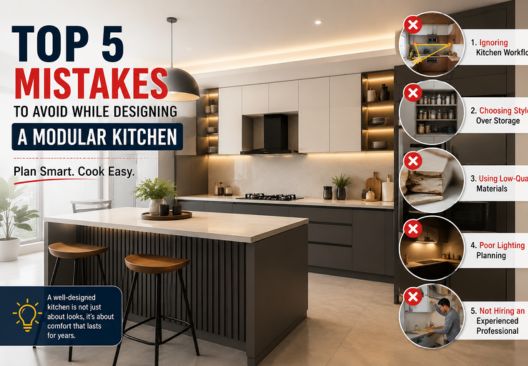
1. Designing the Kitchen for Instagram Instead of Real Life
This is probably the most common mistake right now.
People save dozens of kitchen images from Pinterest or Instagram and try to recreate the same look without thinking about their own lifestyle.
The problem is that those kitchens are often designed for photoshoots — not for Indian cooking habits.
A glossy all-white kitchen may look stunning online, but if you cook regularly with spices, oils, and heavy utensils, maintaining it becomes exhausting. Similarly, open shelves might appear minimal and modern, but in real homes, they usually collect dust and clutter surprisingly fast.
A kitchen should match the way your family actually lives.
For example, many Gurugram families now prefer larger drawer systems instead of traditional cabinets because they’re easier to access during busy mornings. Some homeowners prioritize appliance storage because countertop clutter becomes frustrating in compact apartments.
These are practical decisions. And honestly, practicality matters far more than trends once the excitement of renovation fades.
The best modular kitchens are not the flashiest ones.
They’re the kitchens that continue to feel comfortable after years of daily use.
2. Underestimating How Much Storage You Actually Need
Almost every homeowner says the same thing during the planning stage:
“We don’t need too much storage.”
And somehow, within a year, the kitchen starts overflowing.
Extra jars appear. Appliances take over the countertop. Grocery packets get pushed into random corners. Suddenly the kitchen that once looked spacious starts feeling cramped for no obvious reason.
This happens because people usually plan storage based on how the kitchen looks when it’s empty — not how it functions during real life.
Indian kitchens, especially in Gurugram households, need more storage than people initially assume. Pressure cookers, mixers, air fryers, spices, dry groceries, festival utensils… things add up very quickly.
A lot of homeowners also ignore vertical storage. They leave empty wall space unused while struggling for cabinet space below.
Good modular kitchen planning is less about adding “more cabinets” and more about creating smarter storage. Deep drawers, corner pull-outs, tall pantry units, and properly divided sections make everyday work noticeably easier.
And honestly, nothing makes a kitchen feel luxurious more than being organized without effort.
3. Trying to Save Money on Materials That Face Daily Wear
There’s a difference between smart budgeting and cutting corners.
Unfortunately, many people realize that difference only after the kitchen starts deteriorating.
The kitchen is probably the hardest working area in the house. Heat, moisture, oil stains, constant opening and closing — everything gets tested here daily. So when low-quality boards or cheap hardware are used just to reduce quotation costs, problems start appearing surprisingly fast.
- Cabinets near the sink begin swelling.
- Drawer channels stop moving smoothly.
- Laminate edges start peeling.
- And repairs in modular kitchens are rarely cheap once installation is complete.
In Gurugram, this becomes even more important because seasonal humidity can quietly damage poor-quality materials over time.
A kitchen may look premium on day one, but the real quality shows after two or three years of regular use.
That’s why experienced designers usually push homeowners toward better hardware and moisture-resistant materials even when they’re trying to stay within budget. It’s not about upselling. It’s because replacing damaged kitchen units later becomes far more expensive and frustrating.
A well-built kitchen should age gracefully. You shouldn’t feel like it’s getting old within the first year itself.
4. Forgetting That Lighting Changes Everything
Lighting is one of those things people notice only when it’s bad.
A poorly lit kitchen feels uncomfortable almost immediately, even if the design itself is beautiful.
We’ve seen kitchens with expensive finishes and premium cabinetry still look dull simply because lighting wasn’t planned properly. Shadows fall directly on the countertop. Cooking areas feel dark at night. The entire space starts looking smaller than it actually is.
And then there’s the opposite problem — overly harsh white lighting that makes the kitchen feel like a hospital.
Good kitchen lighting should feel natural.
You need brightness where you work, softer lighting where you want warmth, and enough balance that the space still feels inviting after sunset.
Under-cabinet lights, warm LED strips, and properly positioned ceiling lights make a bigger difference than most homeowners expect.
Natural light matters too. In many Gurugram apartments, kitchens already receive decent daylight during the afternoon. A smart design enhances that openness instead of blocking it with bulky overhead units.
People usually remember cabinet colors.
But what actually defines the mood of a kitchen is lighting.
5. Hiring Based Only on the Lowest Price
This mistake causes more stress than almost anything else.
A modular kitchen quotation can vary massively between vendors, and naturally homeowners feel tempted to choose the cheapest option. On paper, everything may even look similar.
- But execution is where the real difference appears.
- Measurements go wrong.
- Finishing becomes uneven.
- Edges aren’t aligned properly.
- Cheap fittings start loosening.
- Timelines get delayed repeatedly.
And suddenly the money saved initially doesn’t feel worth the daily frustration.
A modular kitchen is not just carpentry. It involves planning electrical points, appliance spacing, plumbing coordination, ventilation, storage ergonomics, and long-term usability. That level of detail usually comes only with experience.
The best interior professionals don’t simply “design kitchens.” They solve problems before they happen.
Especially in Gurugram, where every apartment builder has different layouts and site conditions, customization matters a lot more than homeowners realize.
A good designer may not always be the cheapest option.
But they usually help you avoid the expensive mistakes that cost far more later.
Frequently Asked Questions
What is the biggest mistake people make while designing a modular kitchen?
The most common mistake is prioritizing aesthetics over functionality. A kitchen should first support comfortable cooking, storage, and movement before focusing on visual design.
How much does a modular kitchen cost in Gurugram?
The cost of a modular kitchen in Gurugram usually depends on kitchen size, materials, finishes, and hardware quality. Basic kitchens may start from affordable ranges, while premium kitchens can cost significantly more.
Which material is best for a modular kitchen in Gurgaon?
Moisture-resistant plywood, HDHMR boards, and high-quality laminates are considered reliable options for modular kitchens in Gurugram due to durability and weather resistance.
How can I increase storage in a small modular kitchen?
Using tall cabinets, corner units, pull-out drawers, and overhead storage can help maximize storage in compact kitchens without making the space feel crowded.
Is hiring an interior designer worth it for modular kitchens?
Yes. An experienced interior designer helps optimize layout, storage, material selection, and execution quality, which can prevent expensive mistakes in the future.